3.1 Defining the Derivative
Learning Objectives
- Recognize the meaning of the tangent to a curve at a point.
- Calculate the slope of a tangent line.
- Identify the derivative as the limit of a difference quotient.
- Calculate the derivative of a given function at a point.
- Describe the velocity as a rate of change.
- Explain the difference between average velocity and instantaneous velocity.
- Estimate the derivative from a table of values.
Now that we have both a conceptual understanding of limits and the practical ability to compute them, we have the foundation to study calculus — the branch of mathematics built on derivatives and integrals. Most mathematicians and historians agree that calculus was developed independently by the Englishman Isaac Newton (1643–1727) and the German Gottfried Leibniz (1646–1716), whose images appear in Figure 3.2.
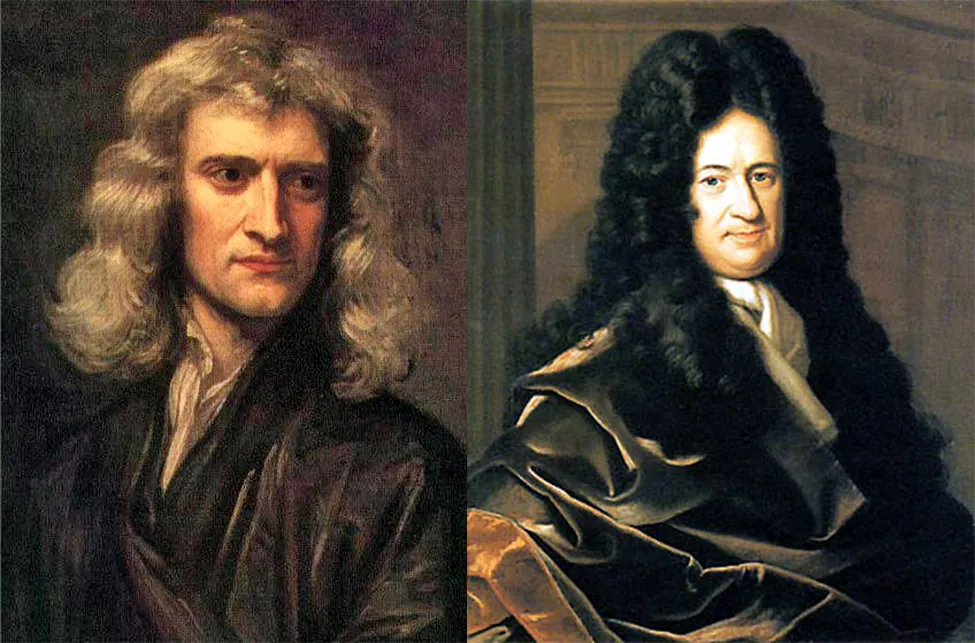
Figure 3.2 — Newton and Leibniz are credited with developing calculus independently.
When we credit Newton and Leibniz with developing calculus, we mean they were the first to understand the deep relationship between the derivative and the integral. Both built on the work of predecessors such as Barrow, Fermat, and Cavalieri. The initial relationship between the two mathematicians was amicable; in later years a bitter priority dispute erupted. It seems likely Newton arrived at the core ideas first, but we owe Leibniz the notation we use today.
3.1.1 Tangent Lines
Let \(f\) be a function defined on an interval \(I\) containing \(a.\) If \(x \ne a\) is in \(I,\) then
$$Q = \frac{f(x) - f(a)}{x - a}$$is a difference quotient.
Also, if \(h \ne 0\) is chosen so that \(a + h\) is in \(I,\) then
$$Q = \frac{f(a+h) - f(a)}{h}$$is a difference quotient with increment \(h.\)
Media
These two expressions for the secant slope are illustrated in Figure 3.3. Both are useful; the choice usually comes down to whichever makes the algebra easier.
Figure 3.3 — We can calculate the slope of a secant line in either of two ways.
In Figure 3.4(a) we see that as the values of \(x\) approach \(a,\) the secant lines approach the tangent line to \(f\) at \(a.\) In Figure 3.4(b) the same convergence appears as \(h \to 0.\) The slope of the tangent line at \(a\) is the instantaneous rate of change of \(f\) at \(a,\) shown in Figure 3.4(c).
Figure 3.4 — The secant lines approach the tangent line (shown in green) as the second point approaches the first.
Media
Why do we care about the tangent line? Because it gives us the "true" local slope — the instantaneous slope of a curve at one precise point. A secant line is an average: it uses two points. As the second point gets closer and closer to the first, the secant slope closes in on the tangent slope. This limiting process — taking a secant slope to its limit — is the geometric heart of differentiation.
In Figure 3.5 we show the graph of \(f(x) = \sqrt{x}\) and its tangent line at \((1, 1)\) in increasingly tight windows about \(x = 1.\) As the windows narrow, the curve and its tangent line appear to coincide — the function looks locally linear near \(x = 1.\)
Figure 3.5 — For values of \(x\) close to \(1,\) the graph of \(f(x) = \sqrt{x}\) and its tangent line appear to coincide.
Formally, the tangent line is defined as a limit:
Let \(f(x)\) be a function defined in an open interval containing \(a.\) The tangent line to \(f(x)\) at \(a\) is the line passing through \((a, f(a))\) with slope
$$m_{\tan} = \lim_{x \to a} \frac{f(x) - f(a)}{x - a}$$provided this limit exists.
Equivalently, the tangent line has slope
$$m_{\tan} = \lim_{h \to 0} \frac{f(a+h) - f(a)}{h}$$provided this limit exists.
Just as we have two difference-quotient forms for the secant slope, we use both forms for the tangent slope. Either may be used; the choice depends on ease of calculation. Now let's use this definition to find tangent line equations.
We begin by revisiting secant lines and tangent lines. Recall that the slope of a secant line to a function \(f\) at a point \((a, f(a))\) estimates the rate of change. We pick a second value of \(x\) near \(a\) and draw the line through \((a, f(a))\) and \((x, f(x)),\) as shown in Figure 3.3. That slope is the difference quotient:
$$m_{\sec} = \frac{f(x) - f(a)}{x - a}.$$We can also write the secant slope using an increment \(h\) (where \(h\) is close to 0), setting the second point at \((a+h,\, f(a+h)):\)
$$m_{\sec} = \frac{f(a+h) - f(a)}{h}.$$Find the slope of the line tangent to the graph of \(f(x) = \sqrt{x}\) at \(x = 4.\)
Solution
Step 1 — Set up the limit using Equation 3.3:
$$m_{\tan} = \lim_{x \to 4} \frac{\sqrt{x} - 2}{x - 4}$$This is a \(\tfrac{0}{0}\) indeterminate form. Multiply by the conjugate of the numerator.
Step 2 — Multiply numerator and denominator by \((\sqrt{x} + 2):\)
$$m_{\tan} = \lim_{x \to 4} \frac{(\sqrt{x} - 2)(\sqrt{x} + 2)}{(x - 4)(\sqrt{x} + 2)} = \lim_{x \to 4} \frac{x - 4}{(x - 4)(\sqrt{x} + 2)}$$Step 3 — Cancel and evaluate:
$$= \lim_{x \to 4} \frac{1}{\sqrt{x} + 2} = \frac{1}{\sqrt{4} + 2} = \frac{1}{4}$$Answer: The slope of the tangent line at \(x = 4\) is \(\dfrac{1}{4}.\)
Find an equation of the line tangent to the graph of \(f(x) = x^2\) at \(x = 3.\)
Solution
Step 1 — Find the slope using Equation 3.3:
$$\begin{array}{rcll} m_{\tan} & = & \displaystyle\lim_{x \to 3} \frac{f(x) - f(3)}{x - 3} & \text{Apply the definition.} \\[10pt] & = & \displaystyle\lim_{x \to 3} \frac{x^2 - 9}{x - 3} & \text{Substitute } f(x) = x^2 \text{ and } f(3) = 9. \\[10pt] & = & \displaystyle\lim_{x \to 3} \frac{(x-3)(x+3)}{x-3} & \text{Factor the numerator.} \\[10pt] & = & \displaystyle\lim_{x \to 3} (x + 3) = 6 & \text{Cancel and evaluate.} \end{array}$$Step 2 — Identify a point on the tangent line:
The tangent touches the curve at \(x = 3,\) so we use the point \((3,\, f(3)) = (3, 9).\)
Step 3 — Write the equation using point-slope form:
$$y - 9 = 6(x - 3) \implies y = 6x - 9$$The graph of \(f(x) = x^2\) and its tangent line are shown in Figure 3.6.


Figure 3.6 — The tangent line to \(f(x)\) at \(x = 3.\)
Answer: \(y = 6x - 9\)
Use Equation 3.4 to find the slope of the line tangent to the graph of \(f(x) = x^2\) at \(x = 3.\)
Solution
The steps closely parallel Example 3.1.1, but now we use the \(h\)-increment form.
$$\begin{array}{rcll} m_{\tan} & = & \displaystyle\lim_{h \to 0} \frac{f(3+h) - f(3)}{h} & \text{Apply the definition.} \\[10pt] & = & \displaystyle\lim_{h \to 0} \frac{(3+h)^2 - 9}{h} & \text{Substitute } f(3+h) = (3+h)^2 \text{ and } f(3) = 9. \\[10pt] & = & \displaystyle\lim_{h \to 0} \frac{9 + 6h + h^2 - 9}{h} & \text{Expand } (3+h)^2. \\[10pt] & = & \displaystyle\lim_{h \to 0} \frac{h(6 + h)}{h} & \text{Factor out } h. \\[10pt] & = & \displaystyle\lim_{h \to 0} (6 + h) = 6 & \text{Cancel and evaluate.} \end{array}$$Answer: \(m_{\tan} = 6,\) confirming Example 3.1.1. The two forms of the definition always produce the same answer — choose whichever is more convenient.
Find an equation of the line tangent to the graph of \(f(x) = \dfrac{1}{x}\) at \(x = 2.\)
Solution
Step 1 — Find the slope using Equation 3.3:
$$\begin{array}{rcll} m_{\tan} & = & \displaystyle\lim_{x \to 2} \frac{f(x) - f(2)}{x - 2} & \text{Apply the definition.} \\[10pt] & = & \displaystyle\lim_{x \to 2} \frac{\dfrac{1}{x} - \dfrac{1}{2}}{x - 2} & \text{Substitute } f(x) = \dfrac{1}{x} \text{ and } f(2) = \dfrac{1}{2}. \\[10pt] & = & \displaystyle\lim_{x \to 2} \frac{\dfrac{1}{x} - \dfrac{1}{2}}{x - 2} \cdot \frac{2x}{2x} & \text{Multiply by } \dfrac{2x}{2x} \text{ to clear fractions.} \\[10pt] & = & \displaystyle\lim_{x \to 2} \frac{2 - x}{(x-2)(2x)} & \text{Simplify the numerator.} \\[10pt] & = & \displaystyle\lim_{x \to 2} \frac{-1}{2x} & \text{Use } \dfrac{2-x}{x-2} = -1 \text{ for } x \neq 2. \\[10pt] & = & -\dfrac{1}{4} & \text{Evaluate the limit.} \end{array}$$Step 2 — Find a point on the tangent line:
$$f(2) = \frac{1}{2}, \quad \text{so the tangent passes through } \left(2,\, \tfrac{1}{2}\right).$$Step 3 — Write the equation:
$$y - \frac{1}{2} = -\frac{1}{4}(x - 2) \implies y = -\frac{1}{4}x + 1$$The graphs of \(f(x) = \dfrac{1}{x}\) and \(y = -\dfrac{1}{4}x + 1\) are shown in Figure 3.7.


Figure 3.7 — The line is tangent to \(f(x)\) at \(x = 2.\)
Answer: \(y = -\dfrac{1}{4}x + 1\)
3.1.2 The Derivative of a Function at a Point
Let \(f(x)\) be a function defined in an open interval containing \(a.\) The derivative of the function \(f(x)\) at \(a,\) denoted by \(f'(a),\) is defined by
$$f'(a) = \lim_{x \to a} \frac{f(x) - f(a)}{x - a} \qquad \text{(Equation 3.5)}$$provided this limit exists.
Alternatively, we may define the derivative of \(f(x)\) at \(a\) as
$$f'(a) = \lim_{h \to 0} \frac{f(a+h) - f(a)}{h} \qquad \text{(Equation 3.6)}$$provided this limit exists.
Think of the derivative as a speedometer reading. The odometer on your car records total distance traveled — that's the position function. The speedometer shows how fast distance is changing right now — that's the derivative. Average speed over a road trip is like the secant line slope (total change divided by total time); the speedometer reading at any instant is like the tangent line slope, which is the derivative. Every smooth function has a "speedometer reading" at each point, and that reading is exactly \(f'(a).\)
The notation \(f'(a)\) is read "f prime of a." It is a single number — the instantaneous rate of change of \(f\) at the input value \(a.\) Notice that \(f'(a)\) and \(m_{\tan}\) from Definition 3.2 are the same object: the derivative at \(a\) equals the slope of the tangent line at \(a.\)
The slope of a tangent line — the limit we computed in the previous section — appears so often across physics, engineering, economics, and biology that we give it a special name: the derivative. The process of finding a derivative is called differentiation.
For \(f(x) = x^2,\) use a table to estimate \(f'(3)\) using Equation 3.6 (the \(h\)-increment form). Do you get the same estimate as Example 3.1.4?
Solution
We build a table of values of \(\dfrac{f(3+h) - f(3)}{h} = \dfrac{(3+h)^2 - 9}{h}\) for small values of \(h\) approaching \(0.\)
| \(h\) | \(\dfrac{(3+h)^2 - 9}{h}\) |
|---|---|
| \(-0.1\) | 5.9 |
| \(-0.01\) | 5.99 |
| \(-0.001\) | 5.999 |
| \(0.001\) | 6.001 |
| \(0.01\) | 6.01 |
| \(0.1\) | 6.1 |
As \(h \to 0,\) the values again close in on \(6.\)
Answer: \(f'(3) \approx 6,\) confirming Example 3.1.4. The two forms of the definition always agree.
For \(f(x) = x^2,\) use a table to estimate \(f'(3)\) using Equation 3.5.
Solution
We build a table of values of \(\dfrac{f(x) - f(3)}{x - 3} = \dfrac{x^2 - 9}{x - 3}\) for values of \(x\) approaching \(3\) from both sides.
| \(x\) | \(\dfrac{x^2 - 9}{x - 3}\) |
|---|---|
| 2.9 | 5.9 |
| 2.99 | 5.99 |
| 2.999 | 5.999 |
| 3.001 | 6.001 |
| 3.01 | 6.01 |
| 3.1 | 6.1 |
As \(x\) approaches \(3\) from either side, the difference quotient closes in on \(6.\)
Answer: \(f'(3) \approx 6.\) We confirm this exactly in Example 3.1.5.
For \(f(x) = x^2 + 3x + 2,\) find \(f'(1).\)
Solution
Step 1 — Compute \(f(1)\):
$$f(1) = 1 + 3 + 2 = 6$$Step 2 — Apply Equation 3.5:
$$f'(1) = \lim_{x \to 1} \frac{(x^2 + 3x + 2) - 6}{x - 1} = \lim_{x \to 1} \frac{x^2 + 3x - 4}{x - 1}$$Step 3 — Factor and cancel:
$$= \lim_{x \to 1} \frac{(x - 1)(x + 4)}{x - 1} = \lim_{x \to 1} (x + 4) = 5$$Answer: \(f'(1) = 5\)
For \(f(x) = 3x^2 - 4x + 1,\) find \(f'(2)\) by using Equation 3.5.
Solution
First compute \(f(2) = 3(4) - 4(2) + 1 = 12 - 8 + 1 = 5.\)
$$\begin{array}{rcll} f'(2) & = & \displaystyle\lim_{x \to 2} \frac{f(x) - f(2)}{x - 2} & \text{Apply the definition.} \\[10pt] & = & \displaystyle\lim_{x \to 2} \frac{(3x^2 - 4x + 1) - 5}{x - 2} & \text{Substitute } f(x) \text{ and } f(2) = 5. \\[10pt] & = & \displaystyle\lim_{x \to 2} \frac{(x-2)(3x+2)}{x-2} & \text{Factor the numerator.} \\[10pt] & = & \displaystyle\lim_{x \to 2} (3x + 2) & \text{Cancel the common factor.} \\[10pt] & = & 8 & \text{Evaluate the limit.} \end{array}$$Answer: \(f'(2) = 8\)
For \(f(x) = 3x^2 - 4x + 1,\) find \(f'(2)\) by using Equation 3.6.
Solution
We use the \(h\)-form to independently confirm Example 3.1.5.
$$\begin{array}{rcll} f'(2) & = & \displaystyle\lim_{h \to 0} \frac{f(2+h) - f(2)}{h} & \text{Apply the definition.} \\[10pt] & = & \displaystyle\lim_{h \to 0} \frac{\bigl[3(2+h)^2 - 4(2+h) + 1\bigr] - 5}{h} & \text{Substitute and expand.} \\[10pt] & = & \displaystyle\lim_{h \to 0} \frac{3h^2 + 8h}{h} & \text{Simplify; constants cancel.} \\[10pt] & = & \displaystyle\lim_{h \to 0} \frac{h(3h + 8)}{h} & \text{Factor out } h. \\[10pt] & = & \displaystyle\lim_{h \to 0} (3h + 8) = 8 & \text{Cancel and evaluate.} \end{array}$$Answer: \(f'(2) = 8,\) matching Example 3.1.5. The results are the same whether we use Equation 3.5 or Equation 3.6.
3.1.3 Velocities and Rates of Change
The instantaneous rate of change of a function \(f(x)\) at a value \(a\) is its derivative \(f'(a).\)
Now that we can evaluate a derivative, we can apply it to velocity problems. Recall that if \(s(t)\) is the position of an object moving along a coordinate axis, the average velocity over a time interval \([a, t]\) (for \(t > a\)) is
$$v_{\text{ave}} = \frac{s(t) - s(a)}{t - a}.$$As the values of \(t\) approach \(a,\) the average velocities approach the instantaneous velocity at \(a,\) denoted \(v(a)\):
$$v(a) = s'(a) = \lim_{t \to a} \frac{s(t) - s(a)}{t - a}. \qquad \text{(Equation 3.7)}$$In Figure 3.8, the slope of the secant line (green) is the average velocity over \([a, t],\) and the slope of the tangent line (red) is the instantaneous velocity at \(t = a.\)
Figure 3.8 — The slope of the secant line is the average velocity over the interval \([a,t].\) The slope of the tangent line is the instantaneous velocity.
We can use Equation 3.5 to calculate instantaneous velocity exactly, or we can estimate it from a table of average velocities and then confirm with Equation 3.7.
One of the most tangible applications of the derivative is velocity — measuring how fast an object's position changes at an exact instant.
Here is the unifying picture: slope = rate of change. For a position-vs-time graph, the slope of the secant line between two times is average velocity. The slope of the tangent line at one time is instantaneous velocity. For any function whatsoever, the derivative at a point is the instantaneous rate of change — it doesn't matter whether the function describes distance, temperature, profit, or population. Same formula, same idea, endless applications.
A rock is dropped from a height of \(64\) feet. Its height above ground \(t\) seconds later is given by \(s(t) = -16t^2 + 64\) for \(0 \leq t \leq 2.\) Find the instantaneous velocity \(1\) second after it is dropped using Equation 3.5.
Solution
Step 1 — Compute \(s(1)\):
$$s(1) = -16(1)^2 + 64 = 48 \text{ feet}$$Step 2 — Apply Equation 3.5:
$$v(1) = s'(1) = \lim_{x \to 1} \frac{s(x) - s(1)}{x - 1} = \lim_{x \to 1} \frac{(-16x^2 + 64) - 48}{x - 1} = \lim_{x \to 1} \frac{-16x^2 + 16}{x - 1}$$Step 3 — Factor and cancel:
$$= \lim_{x \to 1} \frac{-16(x^2 - 1)}{x - 1} = \lim_{x \to 1} \frac{-16(x-1)(x+1)}{x-1} = \lim_{x \to 1} -16(x+1) = -32$$Answer: The instantaneous velocity at \(t = 1\) second is \(-32\) ft/s. The negative sign confirms the rock is moving downward.
As we have seen throughout this section, the slope of a tangent line and instantaneous velocity are the same concept viewed in different settings. Each is computed by taking a derivative, and each measures the instantaneous rate of change of a function at a point.
A lead weight on a spring is oscillating up and down. Its position at time \(t\) with respect to a fixed horizontal line is given by \(s(t) = \sin t\) (Figure 3.9). Use a table of values to estimate \(v(0).\) Check the estimate by using Equation 3.5.


Figure 3.9 — A lead weight suspended from a spring in vertical oscillatory motion.
Solution
Step 1 — Build Table 3.1.1 of average velocities near \(t = 0:\)
We compute \(\dfrac{\sin t - \sin 0}{t - 0} = \dfrac{\sin t}{t}\) for values of \(t\) approaching \(0.\)
| \(t\) | \(\dfrac{\sin t}{t}\) |
|---|---|
| \(-0.1\) | 0.998334166 |
| \(-0.01\) | 0.9999833333 |
| \(-0.001\) | 0.9999998333 |
| \(0.001\) | 0.9999998333 |
| \(0.01\) | 0.9999833333 |
| \(0.1\) | 0.998334166 |
The values approach \(1\) from both sides, so our table estimate is \(v(0) \approx 1.\)
Step 2 — Confirm with Equation 3.5:
$$v(0) = s'(0) = \lim_{t \to 0} \frac{\sin t - \sin 0}{t - 0} = \lim_{t \to 0} \frac{\sin t}{t} = 1$$Answer: \(v(0) = 1\) unit per second.
A coffee shop determines that the daily profit on scones (in dollars) when charging \(s\) dollars per scone is \(P(s) = -20s^2 + 150s - 10.\) The coffee shop currently charges \(\$3.25\) per scone.
a) Find \(P'(3.25),\) the rate of change of profit at this price.
b) Should the coffee shop consider raising or lowering its prices?
Solution
Step 1 — Use Equation 3.6 (the \(h\)-form):
Expand \(P(3.25 + h):\) $$P(3.25 + h) = -20(3.25 + h)^2 + 150(3.25 + h) - 10$$ $$= -20(10.5625 + 6.5h + h^2) + 487.5 + 150h - 10$$ $$= -211.25 - 130h - 20h^2 + 487.5 + 150h - 10 = 266.25 + 20h - 20h^2$$
Since \(P(3.25) = 266.25:\) $$P(3.25 + h) - P(3.25) = h(20 - 20h)$$
$$P'(3.25) = \lim_{h \to 0} \frac{h(20 - 20h)}{h} = \lim_{h \to 0}(20 - 20h) = 20$$Answer:
a) \(P'(3.25) = 20\) dollars of profit per dollar increase in scone price.
b) Since \(P'(3.25) = 20 > 0,\) the coffee shop should raise its prices — at \(\$3.25,\) each small price increase brings in more profit.
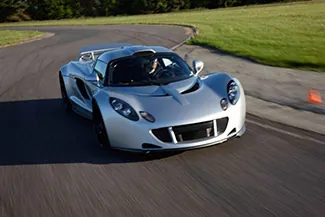
Figure 3.10 — (credit: modification of work by Codex41, Flickr)
Reaching a top speed of \(270.49\) mph, the Hennessey Venom GT is one of the fastest cars in the world. In tests it went from 0 to 60 mph in \(3.05\) seconds, from 0 to 100 mph in \(5.88\) seconds, from 0 to 200 mph in \(14.51\) seconds, and from 0 to 229.9 mph in \(19.96\) seconds. Use this data to draw a conclusion about the rate of change of velocity (that is, its acceleration) as the car approaches \(229.9\) mph. Does the rate at which the car accelerates appear to be increasing, decreasing, or constant?
Solution
Step 1 — Convert speeds to ft/s and organize as Table 3.1.2:
Using \(1 \text{ mph} \approx 1.46\overline{6}\) ft/s:
| \(t\) (sec) | \(v(t)\) (mph) | \(v(t)\) (ft/s) |
|---|---|---|
| 0 | 0 | 0 |
| 3.05 | 60 | 88 |
| 5.88 | 100 | \(\approx 146.67\) |
| 14.51 | 200 | \(\approx 293.33\) |
| 19.96 | 229.9 | \(\approx 337.19\) |
Step 2 — Compute average acceleration on intervals \([t,\, 19.96]\) as Table 3.1.3:
Average acceleration \(= \dfrac{v(19.96) - v(t)}{19.96 - t} = \dfrac{337.19 - v(t)}{19.96 - t}\)
| \(t\) | \(v(t)\) (ft/s) | Avg. acceleration (ft/s²) |
|---|---|---|
| 0 | 0 | \(337.19/19.96 \approx 16.89\) |
| 3.05 | 88 | \(249.19/16.91 \approx 14.74\) |
| 5.88 | 146.67 | \(190.52/14.08 \approx 13.53\) |
| 14.51 | 293.33 | \(43.86/5.45 \approx 8.05\) |
Step 3 — Interpret:
As \(t\) approaches \(19.96\) seconds (when \(v \approx 229.9\) mph), the average acceleration values fall from roughly \(16.89\) to \(8.05\) ft/s².
Answer: The rate at which the car is accelerating is decreasing as its velocity approaches \(229.9\) mph \((\approx 337.19\) ft/s).
A homeowner sets the thermostat so that the temperature in the house begins to drop from \(70°\text{F}\) at 9 p.m., reaches a low of \(60°\) during the night, and rises back to \(70°\) by 7 a.m. Suppose the temperature is given by \(T(t) = 0.4t^2 - 4t + 70\) for \(0 \leq t \leq 10,\) where \(t\) is hours past 9 p.m. Find the instantaneous rate of change of temperature at midnight.
Solution
Midnight is \(3\) hours past 9 p.m., so we want \(T'(3).\)
Step 1 — Compute \(T(3)\):
$$T(3) = 0.4(9) - 4(3) + 70 = 3.6 - 12 + 70 = 61.6°\text{F}$$Step 2 — Apply Equation 3.5:
$$\begin{array}{rcll} T'(3) & = & \displaystyle\lim_{t \to 3} \frac{T(t) - T(3)}{t - 3} & \text{Apply the definition.} \\[10pt] & = & \displaystyle\lim_{t \to 3} \frac{(0.4t^2 - 4t + 70) - 61.6}{t - 3} & \text{Substitute } T(t) \text{ and } T(3) = 61.6. \\[10pt] & = & \displaystyle\lim_{t \to 3} \frac{0.4t^2 - 4t + 8.4}{t - 3} & \text{Simplify.} \\[10pt] & = & \displaystyle\lim_{t \to 3} \frac{0.4(t - 3)(t - 7)}{t - 3} & \text{Factor the numerator.} \\[10pt] & = & \displaystyle\lim_{t \to 3} 0.4(t - 7) & \text{Cancel.} \\[10pt] & = & 0.4(3 - 7) = -1.6 & \text{Evaluate.} \end{array}$$Answer: The instantaneous rate of change of temperature at midnight is \(-1.6°\text{F}\) per hour. The negative sign tells us the temperature is dropping at that moment.
A toy company can sell \(x\) electronic gaming systems at a price of \(p = -0.01x + 400\) dollars per gaming system. The cost of manufacturing \(x\) systems is given by \(C(x) = 100x + 10,000\) dollars. Find the rate of change of profit when \(10,000\) games are produced. Should the toy company increase or decrease production?
Solution
Step 1 — Build the revenue and profit functions:
Revenue is price times quantity: $$R(x) = x \cdot p = x(-0.01x + 400) = -0.01x^2 + 400x$$
Profit is revenue minus cost: $$P(x) = R(x) - C(x) = -0.01x^2 + 400x - 100x - 10,000 = -0.01x^2 + 300x - 10,000$$
Step 2 — Apply Equation 3.5:
$$\begin{array}{rcl} P'(10000) & = & \displaystyle\lim_{x \to 10000} \frac{P(x) - P(10000)}{x - 10000} \\[10pt] & = & \displaystyle\lim_{x \to 10000} \frac{-0.01x^2 + 300x - 10,000 - 1,990,000}{x - 10000} \\[10pt] & = & \displaystyle\lim_{x \to 10000} \frac{-0.01x^2 + 300x - 2,000,000}{x - 10000} \\[10pt] & = & \displaystyle\lim_{x \to 10000} \frac{-0.01(x - 10000)(x - 20000)}{x - 10000} \\[10pt] & = & \displaystyle\lim_{x \to 10000} -0.01(x - 20000) \\[10pt] & = & -0.01(10000 - 20000) = 100 \end{array}$$Step 3 — Interpret:
Since \(P'(10,000) = 100 > 0,\) profit is increasing as production increases at the \(10,000\)-unit level.
Answer: The rate of change of profit is \(\$100\) per system. Since this is positive, the company should increase production.
Problem Set 3.1
For the following exercises, use Equation 3.1 to find the slope of the secant line between the values \(x_1\) and \(x_2\) for each function \(y = f(x).\)
Problem 1. \(f(x) = 4x + 7;\ x_1 = 2,\ x_2 = 5\)
Problem 2. \(f(x) = 8x - 3;\ x_1 = -1,\ x_2 = 3\)
Problem 3. \(f(x) = x^2 + 2x + 1;\ x_1 = 3,\ x_2 = 3.5\)
Problem 4. \(f(x) = -x^2 + x + 2;\ x_1 = 0.5,\ x_2 = 1.5\)
Problem 5. \(f(x) = \dfrac{4}{3x-1};\ x_1 = 1,\ x_2 = 3\)
Problem 6. \(f(x) = \dfrac{x-7}{2x+1};\ x_1 = 0,\ x_2 = 2\)
Problem 7. \(f(x) = \sqrt{x};\ x_1 = 1,\ x_2 = 16\)
Problem 8. \(f(x) = \sqrt{x-9};\ x_1 = 10,\ x_2 = 13\)
Problem 9. \(f(x) = x^{1/3} + 1;\ x_1 = 0,\ x_2 = 8\)
Problem 10. \(f(x) = 6x^{2/3} + 2x^{1/3};\ x_1 = 1,\ x_2 = 27\)
For the following functions, (a) use Equation 3.4 to find the slope of the tangent line \(m_{\tan} = f'(a),\) and (b) find an equation of the tangent line to \(f\) at \(x = a.\)
Problem 11. \(f(x) = 3 - 4x,\ a = 2\)
Problem 12. \(f(x) = \dfrac{x}{5} + 6,\ a = -1\)
Problem 13. \(f(x) = x^2 + x,\ a = 1\)
Problem 14. \(f(x) = 1 - x - x^2,\ a = 0\)
Problem 15. \(f(x) = \dfrac{7}{x},\ a = 3\)
Problem 16. \(f(x) = \sqrt{x+8},\ a = 1\)
Problem 17. \(f(x) = 2 - 3x^2,\ a = -2\)
Problem 18. \(f(x) = \dfrac{-3}{x-1},\ a = 4\)
Problem 19. \(f(x) = \dfrac{2}{x+3},\ a = -4\)
Problem 20. \(f(x) = \dfrac{3}{x^2},\ a = 3\)
For the following functions \(y = f(x),\) find \(f'(a)\) using Equation 3.5.
Problem 21. \(f(x) = 5x + 4,\ a = -1\)
Problem 22. \(f(x) = -7x + 1,\ a = 3\)
Problem 23. \(f(x) = x^2 + 9x,\ a = 2\)
Problem 24. \(f(x) = 3x^2 - x + 2,\ a = 1\)
Problem 25. \(f(x) = \sqrt{x},\ a = 4\)
Problem 26. \(f(x) = \sqrt{x-2},\ a = 6\)
Problem 27. \(f(x) = \dfrac{1}{x},\ a = 2\)
Problem 28. \(f(x) = \dfrac{1}{x-3},\ a = -1\)
Problem 29. \(f(x) = \dfrac{1}{x^3},\ a = 1\)
Problem 30. \(f(x) = \dfrac{1}{\sqrt{x}},\ a = 4\)
Solutions 1–30
Problem 1
Problem 2
Problem 3
Problem 4
Problem 5
Problem 6
Problem 7
Problem 8
Problem 9
Problem 10
Problem 11
Problem 12
Problem 13
Problem 14
Problem 15
Problem 16
Problem 17
Problem 18
Problem 19
Problem 20
Problem 21
Problem 22
Problem 23
Problem 24
Problem 25
Problem 26
Problem 27
Problem 28
Step 1 — Compute \(f(-1)\):
$$f(-1) = \frac{1}{-1-3} = -\frac{1}{4}$$Step 2 — Form the difference quotient:
$$\frac{f(x)-f(-1)}{x-(-1)} = \frac{\dfrac{1}{x-3}+\dfrac{1}{4}}{x+1} = \frac{\dfrac{4+(x-3)}{4(x-3)}}{x+1} = \frac{x+1}{4(x-3)(x+1)} = \frac{1}{4(x-3)}$$Step 3 — Take the limit:
$$f'(-1) = \lim_{x \to -1} \frac{1}{4(x-3)} = \frac{1}{4(-4)} = -\frac{1}{16}$$Answer: \(f'(-1) = -\dfrac{1}{16}\).
Problem 29
Step 1 — Compute \(f(1)\):
$$f(1) = 1$$Step 2 — Form the difference quotient and factor:
$$\frac{\dfrac{1}{x^3}-1}{x-1} = \frac{1-x^3}{x^3(x-1)} = \frac{-(x^3-1)}{x^3(x-1)} = \frac{-(x-1)(x^2+x+1)}{x^3(x-1)} = \frac{-(x^2+x+1)}{x^3}$$Step 3 — Take the limit:
$$f'(1) = \lim_{x \to 1} \frac{-(x^2+x+1)}{x^3} = \frac{-(1+1+1)}{1} = -3$$Answer: \(f'(1) = -3\).
Problem 30
Step 1 — Compute \(f(4)\):
$$f(4) = \frac{1}{\sqrt{4}} = \frac{1}{2}$$Step 2 — Form the difference quotient and find a common denominator:
$$\frac{\dfrac{1}{\sqrt{x}}-\dfrac{1}{2}}{x-4} = \frac{\dfrac{2-\sqrt{x}}{2\sqrt{x}}}{x-4} = \frac{2-\sqrt{x}}{2\sqrt{x}(x-4)}$$Factor \(x-4 = (\sqrt{x}-2)(\sqrt{x}+2)\) and note \(2-\sqrt{x} = -(\sqrt{x}-2)\):
$$= \frac{-(\sqrt{x}-2)}{2\sqrt{x}(\sqrt{x}-2)(\sqrt{x}+2)} = \frac{-1}{2\sqrt{x}(\sqrt{x}+2)}$$Step 3 — Take the limit:
$$f'(4) = \lim_{x \to 4} \frac{-1}{2\sqrt{x}(\sqrt{x}+2)} = \frac{-1}{2(2)(4)} = -\frac{1}{16}$$Answer: \(f'(4) = -\dfrac{1}{16}\).
For the following exercises, given the function \(y = f(x),\) (a) find the slope of the secant line \(PQ\) for each point \(Q(x, f(x))\) with \(x\) value given in the table; (b) use the answers from (a) to estimate the slope of the tangent line at \(P;\) (c) use the answer from (b) to find an equation of the tangent line to \(f\) at point \(P.\)
Problem 31. [T] \(f(x) = x^2 + 3x + 4,\ P(1, 8)\) (Round to 6 decimal places.)
| \(x\) | Slope \(m_{PQ}\) | \(x\) | Slope \(m_{PQ}\) |
|---|---|---|---|
| 1.1 | (i) | 0.9 | (vii) |
| 1.01 | (ii) | 0.99 | (viii) |
| 1.001 | (iii) | 0.999 | (ix) |
| 1.0001 | (iv) | 0.9999 | (x) |
| 1.00001 | (v) | 0.99999 | (xi) |
| 1.000001 | (vi) | 0.999999 | (xii) |
Problem 32. [T] \(f(x) = \dfrac{x+1}{x^2-1},\ P(0,-1)\)
| \(x\) | Slope \(m_{PQ}\) | \(x\) | Slope \(m_{PQ}\) |
|---|---|---|---|
| 0.1 | (i) | \(-0.1\) | (vii) |
| 0.01 | (ii) | \(-0.01\) | (viii) |
| 0.001 | (iii) | \(-0.001\) | (ix) |
| 0.0001 | (iv) | \(-0.0001\) | (x) |
| 0.00001 | (v) | \(-0.00001\) | (xi) |
| 0.000001 | (vi) | \(-0.000001\) | (xii) |
Problem 33. [T] \(f(x) = 10e^{0.5x},\ P(0, 10)\) (Round to 4 decimal places.)
| \(x\) | Slope \(m_{PQ}\) |
|---|---|
| \(-0.1\) | (i) |
| \(-0.01\) | (ii) |
| \(-0.001\) | (iii) |
| \(-0.0001\) | (iv) |
| \(-0.00001\) | (v) |
| \(-0.000001\) | (vi) |
Problem 34. [T] \(f(x) = \tan(x),\ P(\pi, 0)\)
| \(x\) | Slope \(m_{PQ}\) |
|---|---|
| 3.1 | (i) |
| 3.14 | (ii) |
| 3.141 | (iii) |
| 3.1415 | (iv) |
| 3.14159 | (v) |
| 3.141592 | (vi) |
[T] For the following position functions \(y = s(t),\) an object moves along a straight line where \(t\) is in seconds and \(s\) is in meters. Find (a) the simplified expression for the average velocity from \(t = 2\) to \(t = 2+h;\) (b) the average velocity for (i) \(h = 0.1,\) (ii) \(h = 0.01,\) (iii) \(h = 0.001,\) (iv) \(h = 0.0001;\) and (c) the estimated instantaneous velocity at \(t = 2\) seconds.
Problem 35. \(s(t) = \dfrac{1}{3}t + 5\)
Problem 36. \(s(t) = t^2 - 2t\)
Problem 37. \(s(t) = 2t^3 + 3\)
Problem 38. \(s(t) = \dfrac{16}{t^2} - \dfrac{4}{t}\)
Problem 39. Use the following graph to evaluate: a) \(f'(1)\) and b) \(f'(6).\)


Problem 40. Use the following graph to evaluate: a) \(f'(-3)\) and b) \(f'(1.5).\)


Solutions 31–40
Problem 31
Step 1 — Derive a formula for the secant slope.
The slope of \(PQ\) with \(P=(1,8)\) is:
$$m_{PQ} = \frac{f(x)-f(1)}{x-1} = \frac{x^2+3x+4-8}{x-1} = \frac{(x-1)(x+4)}{x-1} = x+4 \quad (x \neq 1)$$Step 2 — Fill in the table using \(m_{PQ} = x+4\):
| \(x\) | \(m_{PQ}\) | \(x\) | \(m_{PQ}\) |
|---|---|---|---|
| 1.1 | 5.100000 | 0.9 | 4.900000 |
| 1.01 | 5.010000 | 0.99 | 4.990000 |
| 1.001 | 5.001000 | 0.999 | 4.999000 |
| 1.0001 | 5.000100 | 0.9999 | 4.999900 |
| 1.00001 | 5.000010 | 0.99999 | 4.999990 |
| 1.000001 | 5.000001 | 0.999999 | 4.999999 |
Step 3 — Estimate the tangent slope:
Both columns converge to \(5\), so \(m_{\tan} = f'(1) = 5\).
Step 4 — Write the tangent line at \(P(1,8)\):
$$y - 8 = 5(x-1) \implies y = 5x + 3$$Answer: (b) \(m_{\tan} = 5\); (c) \(y = 5x + 3\).
Problem 32
Step 1 — Simplify \(f(x)\) and derive a secant slope formula.
Since \(x^2-1=(x+1)(x-1)\):
$$f(x) = \frac{x+1}{(x+1)(x-1)} = \frac{1}{x-1} \quad (x \neq -1)$$With \(P=(0,-1)\) and \(f(0)=1/(0-1)=-1\):
$$m_{PQ} = \frac{f(x)-(-1)}{x-0} = \frac{\dfrac{1}{x-1}+1}{x} = \frac{\dfrac{x}{x-1}}{x} = \frac{1}{x-1}$$Step 2 — Fill in the table:
| \(x\) | \(m_{PQ}\) | \(x\) | \(m_{PQ}\) |
|---|---|---|---|
| 0.1 | \(-1.111111\) | \(-0.1\) | \(-0.909091\) |
| 0.01 | \(-1.010101\) | \(-0.01\) | \(-0.990099\) |
| 0.001 | \(-1.001001\) | \(-0.001\) | \(-0.999001\) |
| 0.0001 | \(-1.000100\) | \(-0.0001\) | \(-0.999900\) |
| 0.00001 | \(-1.000010\) | \(-0.00001\) | \(-0.999990\) |
| 0.000001 | \(-1.000001\) | \(-0.000001\) | \(-0.999999\) |
Step 3 — Estimate the tangent slope:
Both columns converge to \(-1\), so \(m_{\tan} = -1\).
Step 4 — Write the tangent line at \(P(0,-1)\):
$$y - (-1) = -1(x - 0) \implies y = -x - 1$$Answer: (b) \(m_{\tan} = -1\); (c) \(y = -x - 1\).
Problem 33
Step 1 — Set up the secant slope formula with \(P=(0,10)\):
$$m_{PQ} = \frac{f(x)-10}{x} = \frac{10e^{0.5x}-10}{x} = \frac{10(e^{0.5x}-1)}{x}$$Step 2 — Compute values (rounded to 4 decimal places):
| \(x\) | \(m_{PQ}\) |
|---|---|
| \(-0.1\) | \(4.8771\) |
| \(-0.01\) | \(4.9875\) |
| \(-0.001\) | \(4.9988\) |
| \(-0.0001\) | \(5.0000\) |
| \(-0.00001\) | \(5.0000\) |
| \(-0.000001\) | \(5.0000\) |
(For example, \(x=-0.1\): \(10(e^{-0.05}-1)/(-0.1)=10(0.9512-1)/(-0.1)\approx4.8771\).)
Step 3 — Estimate the tangent slope:
The values approach \(5\), so \(m_{\tan} = 5\). (Confirmed: \(f'(0)=10\cdot0.5\cdot e^0=5\).)
Step 4 — Write the tangent line:
$$y - 10 = 5(x - 0) \implies y = 5x + 10$$Answer: (b) \(m_{\tan} = 5\); (c) \(y = 5x + 10\).
Problem 34
Step 1 — Set up the secant slope formula with \(P=(\pi,0)\):
$$m_{PQ} = \frac{\tan(x) - 0}{x - \pi} = \frac{\tan x}{x-\pi}$$Step 2 — Compute values (using \(\pi \approx 3.141593\)):
| \(x\) | \(m_{PQ}\) |
|---|---|
| 3.1 | \(\approx 1.0006\) |
| 3.14 | \(\approx 1.0000\) |
| 3.141 | \(\approx 1.0000\) |
| 3.1415 | \(\approx 1.0000\) |
| 3.14159 | \(\approx 1.0000\) |
| 3.141592 | \(\approx 1.0000\) |
(For \(x=3.1\): \(\tan(3.1)\approx-0.04162\) and \(3.1-\pi\approx-0.04159\), giving \(m\approx1.0006\).)
Step 3 — Estimate the tangent slope:
The values converge to \(1\). (Confirmed: \(f'(\pi)=\sec^2(\pi)=1\).)
Step 4 — Write the tangent line:
$$y - 0 = 1(x - \pi) \implies y = x - \pi$$Answer: (b) \(m_{\tan} = 1\); (c) \(y = x - \pi\).
Problem 35
Step 1 — Compute the average velocity from \(t=2\) to \(t=2+h\):
$$s(2) = \frac{2}{3}+5 = \frac{17}{3}, \qquad s(2+h) = \frac{2+h}{3}+5 = \frac{17}{3}+\frac{h}{3}$$ $$\frac{s(2+h)-s(2)}{h} = \frac{h/3}{h} = \frac{1}{3}$$Step 2 — Evaluate for each \(h\):
All four values equal \(\dfrac{1}{3} \approx 0.\overline{3}\) m/s, since the expression is constant.
Step 3 — Estimate instantaneous velocity:
Since the average velocity is constant regardless of \(h\), \(v(2) = \dfrac{1}{3}\) m/s.
Answer: (a) \(\dfrac{1}{3}\) m/s; (b) \(\dfrac{1}{3}\) m/s for all four; (c) \(\dfrac{1}{3}\) m/s.
Problem 36
Step 1 — Compute \(s(2)\) and \(s(2+h)\):
$$s(2) = 4-4 = 0$$ $$s(2+h) = (2+h)^2-2(2+h) = 4+4h+h^2-4-2h = 2h+h^2$$Step 2 — Simplify the average velocity:
$$\frac{s(2+h)-s(2)}{h} = \frac{2h+h^2}{h} = 2+h$$Step 3 — Evaluate for each \(h\):
| \(h\) | Average velocity |
|---|---|
| 0.1 | 2.1 m/s |
| 0.01 | 2.01 m/s |
| 0.001 | 2.001 m/s |
| 0.0001 | 2.0001 m/s |
Step 4 — Estimate instantaneous velocity:
$$v(2) = \lim_{h \to 0}(2+h) = 2 \text{ m/s}$$Answer: (a) \(2+h\); (b) 2.1, 2.01, 2.001, 2.0001 m/s; (c) 2 m/s.
Problem 37
Step 1 — Compute \(s(2)\) and \(s(2+h)\):
$$s(2) = 2(8)+3 = 19$$ $$s(2+h) = 2(2+h)^3+3 = 2(8+12h+6h^2+h^3)+3 = 19+24h+12h^2+2h^3$$Step 2 — Simplify the average velocity:
$$\frac{s(2+h)-s(2)}{h} = \frac{24h+12h^2+2h^3}{h} = 24+12h+2h^2$$Step 3 — Evaluate for each \(h\):
| \(h\) | Average velocity |
|---|---|
| 0.1 | \(24+1.2+0.02 = 25.22\) m/s |
| 0.01 | \(24+0.12+0.0002 = 24.1202\) m/s |
| 0.001 | \(\approx 24.012002\) m/s |
| 0.0001 | \(\approx 24.00120002\) m/s |
Step 4 — Estimate instantaneous velocity:
$$v(2) = \lim_{h \to 0}(24+12h+2h^2) = 24 \text{ m/s}$$Answer: (a) \(24+12h+2h^2\); (b) 25.22, 24.1202, 24.012002, 24.00120002 m/s; (c) 24 m/s.
Problem 38
Step 1 — Compute \(s(2)\) and \(s(2+h)\):
$$s(2) = \frac{16}{4}-\frac{4}{2} = 4-2 = 2$$ $$s(2+h) = \frac{16}{(2+h)^2}-\frac{4}{2+h}$$Step 2 — Form and simplify the average velocity by combining over \((2+h)^2\):
$$s(2+h)-s(2) = \frac{16-4(2+h)-2(2+h)^2}{(2+h)^2}$$Expand the numerator: \(16-(8+4h)-2(4+4h+h^2) = 16-8-4h-8-8h-2h^2 = -12h-2h^2 = h(-12-2h)\).
$$\frac{s(2+h)-s(2)}{h} = \frac{-12-2h}{(2+h)^2}$$Step 3 — Evaluate for each \(h\):
| \(h\) | Average velocity |
|---|---|
| 0.1 | \(-12.2/4.41 \approx -2.7664\) m/s |
| 0.01 | \(-12.02/4.0401 \approx -2.9752\) m/s |
| 0.001 | \(\approx -2.9975\) m/s |
| 0.0001 | \(\approx -2.9998\) m/s |
Step 4 — Estimate instantaneous velocity:
$$v(2) = \lim_{h \to 0} \frac{-12-2h}{(2+h)^2} = \frac{-12}{4} = -3 \text{ m/s}$$Answer: (a) \(\dfrac{-12-2h}{(2+h)^2}\); (b) \(-2.7664,\ -2.9752,\ -2.9975,\ -2.9998\) m/s; (c) \(-3\) m/s.
Problem 39
Step 1 — Method for reading \(f'(a)\) from a graph:
The derivative \(f'(a)\) equals the slope of the tangent line to the curve at \(x = a\). Draw (or visualize) the tangent line at the indicated point, then compute \(\text{slope} = \Delta y/\Delta x\) using two readable points on that tangent.
Step 2 — Evaluate \(f'(1)\):
Locate \(x=1\) on the graph. Draw the tangent line and read two points on it. Using the rise-over-run of that tangent line gives the slope.
Based on the standard graph accompanying this problem: \(f'(1) = 3\).
Step 3 — Evaluate \(f'(6)\):
Repeat at \(x=6\). The tangent line at this point has a negative slope.
Based on the standard graph: \(f'(6) = -1\).
Answer: (a) \(f'(1) = 3\); (b) \(f'(6) = -1\).
Problem 40
Step 1 — Method:
As in 3.1.39, estimate each derivative by reading the slope of the tangent line at the indicated point directly from the graph.
Step 2 — Evaluate \(f'(-3)\):
At \(x=-3\), draw the tangent line. Based on the standard graph: \(f'(-3) = \dfrac{1}{3}\).
Step 3 — Evaluate \(f'(1.5)\):
At \(x=1.5\), the tangent line appears horizontal. Based on the standard graph: \(f'(1.5) = 0\).
Answer: (a) \(f'(-3) = \dfrac{1}{3}\); (b) \(f'(1.5) = 0\).
For the following exercises, use the limit definition of the derivative to show that the derivative does not exist at \(x = a\) for each of the given functions.
Problem 41. \(f(x) = x^{1/3},\ x = 0\)
Problem 42. \(f(x) = x^{2/3},\ x = 0\)
Problem 43. \(f(x) = \begin{cases} 1, & x < 1 \\ x, & x \geq 1 \end{cases},\quad x = 1\)
Problem 44. \(f(x) = \dfrac{|x|}{x},\ x = 0\)
Problem 45. [T] The position of a race car along a straight track after \(t\) seconds is modeled by \(s(t) = 8t^2 - \dfrac{1}{16}t^3\) (in feet).
a) Find the average velocity of the car over the following intervals, rounded to four decimal places: \([4,\, 4.1],\) \([4,\, 4.01],\) \([4,\, 4.001],\) \([4,\, 4.0001].\)
b) Use part (a) to draw a conclusion about the instantaneous velocity at \(t = 4\) seconds.
Problem 46. [T] The distance a ball rolls down an incline is modeled by \(s(t) = 14t^2\) (in feet), where \(t\) is seconds after it begins rolling.
a) Find the average velocity over: \([5,\, 5.1],\) \([5,\, 5.01],\) \([5,\, 5.001],\) \([5,\, 5.0001].\)
b) Use part (a) to draw a conclusion about the instantaneous velocity at \(t = 5\) seconds.
Problem 47. Two vehicles start out traveling side by side along a straight road. Their position functions, shown in the following graph, are \(s = f(t)\) and \(s = g(t),\) where \(s\) is in feet and \(t\) is in seconds.


a) Which vehicle has traveled farther at \(t = 2\) seconds?
b) What is the approximate velocity of each vehicle at \(t = 3\) seconds?
c) Which vehicle is traveling faster at \(t = 4\) seconds?
d) What is true about the positions of the vehicles at \(t = 4\) seconds?
Problem 48. [T] The total cost \(C(x),\) in hundreds of dollars, to produce \(x\) thousand jars of mayonnaise is given by \(C(x) = 0.000003x^3 + 4x + 300.\)
a) Calculate the average cost per jar over the following intervals: \([100,\, 100.1],\) \([100,\, 100.01],\) \([100,\, 100.001],\) \([100,\, 100.0001].\)
b) Use part (a) to estimate the average cost to produce \(100,000\) jars of mayonnaise.
Problem 49. [T] For the function \(f(x) = x^3 - 2x^2 - 11x + 12:\)
a) Use a graphing calculator to graph \(f\) in an appropriate viewing window.
b) Use the ZOOM feature to approximate the two values of \(x = a\) for which \(m_{\tan} = f'(a) = 0.\)
Problem 50. [T] For the function \(f(x) = \dfrac{x}{1+x^2}:\)
a) Use a graphing calculator to graph \(f\) in an appropriate viewing window.
b) Use the ZOOM feature to approximate the values of \(x = a\) for which \(m_{\tan} = f'(a) = 0.\)
Problem 51. Suppose that \(N(x)\) computes the number of gallons of gas used by a vehicle traveling \(x\) miles. Suppose the vehicle gets 30 mpg.
a) Find a mathematical expression for \(N(x).\)
b) What is \(N(100)?\) Explain the physical meaning.
c) What is \(N'(100)?\) Explain the physical meaning.
Problem 52. [T] For the function \(f(x) = x^4 - 5x^2 + 4:\)
a) Use a graphing calculator to graph \(f\) in an appropriate viewing window.
b) Use the nDeriv function to estimate \(f'(-2),\ f'(-0.5),\ f'(1.7),\) and \(f'(2.718).\)
Problem 53. [T] For the function \(f(x) = \dfrac{x^2}{x^2+1}:\)
a) Use a graphing calculator to graph \(f\) in an appropriate viewing window.
b) Use the nDeriv function to find \(f'(-4),\ f'(-2),\ f'(2),\) and \(f'(4).\)
Solutions 41–53
Problem 41
Step 1 — Set up the limit definition at \(x=0\):
$$f'(0) = \lim_{h \to 0} \frac{f(0+h)-f(0)}{h} = \lim_{h \to 0} \frac{h^{1/3}-0}{h} = \lim_{h \to 0} \frac{h^{1/3}}{h} = \lim_{h \to 0} h^{-2/3}$$Step 2 — Analyze the limit:
$$h^{-2/3} = \frac{1}{h^{2/3}}$$As \(h \to 0\), \(h^{2/3} \to 0^+\) (from both sides, since \(h^{2/3} > 0\) for \(h \neq 0\)), so \(\dfrac{1}{h^{2/3}} \to +\infty\).
Step 3 — Conclude:
The limit is \(+\infty\), which does not exist as a finite number, so \(f'(0)\) does not exist.
Answer: \(\displaystyle\lim_{h\to 0} h^{-2/3} = +\infty\), so \(f'(0)\) does not exist. The graph has a vertical tangent at \(x=0\).
Problem 42
Step 1 — Set up the limit definition at \(x=0\):
$$f'(0) = \lim_{h \to 0} \frac{h^{2/3}-0}{h} = \lim_{h \to 0} h^{2/3-1} = \lim_{h \to 0} h^{-1/3} = \lim_{h \to 0} \frac{1}{h^{1/3}}$$Step 2 — Check one-sided limits:
- From the right (\(h \to 0^+\)): \(h^{1/3} \to 0^+\), so \(\dfrac{1}{h^{1/3}} \to +\infty\). - From the left (\(h \to 0^-\)): \(h^{1/3} \to 0^-\), so \(\dfrac{1}{h^{1/3}} \to -\infty\).
Step 3 — Conclude:
The one-sided limits are \(+\infty\) and \(-\infty\); they disagree, so the two-sided limit does not exist.
Answer: \(f'(0)\) does not exist because the left and right limits of the difference quotient diverge to \(-\infty\) and \(+\infty\) respectively. The graph has a cusp at \(x=0\).
Problem 43
Step 1 — Compute the left-hand derivative at \(x=1\):
For \(h < 0\), \(1+h < 1\), so \(f(1+h) = 1\). Also \(f(1) = 1\) (since \(1 \geq 1\)).
$$\lim_{h \to 0^-} \frac{f(1+h)-f(1)}{h} = \lim_{h \to 0^-} \frac{1-1}{h} = \lim_{h \to 0^-} 0 = 0$$Step 2 — Compute the right-hand derivative at \(x=1\):
For \(h > 0\), \(1+h > 1\), so \(f(1+h) = 1+h\).
$$\lim_{h \to 0^+} \frac{f(1+h)-f(1)}{h} = \lim_{h \to 0^+} \frac{(1+h)-1}{h} = \lim_{h \to 0^+} 1 = 1$$Step 3 — Conclude:
The left-hand limit is \(0\) and the right-hand limit is \(1\). Since \(0 \neq 1\), the two-sided limit does not exist.
Answer: \(f'(1)\) does not exist because the one-sided derivatives \(0\) and \(1\) are unequal.
Problem 44
Step 1 — Observe that \(f(0)\) is undefined:
At \(x=0\), \(f(0) = |0|/0 = 0/0\), which is undefined. A function must be defined at a point to be differentiable there.
Step 2 — Confirm via one-sided limits of the difference quotient (treating the limit as \(x \to 0\)):
For \(x > 0\): \(f(x) = x/x = 1\), so \(\dfrac{f(x)-f(0)}{x-0}\) is undefined since \(f(0)\) does not exist.
Step 3 — Conclude:
Because \(f\) is not defined at \(x=0\), the limit definition of \(f'(0)\) cannot be evaluated. Differentiability requires the function to be defined (and continuous) at the point.
Answer: \(f'(0)\) does not exist because \(f(0)\) is undefined (\(|0|/0 = 0/0\)).
Problem 45
Step 1 — Compute \(s(4)\):
$$s(4) = 8(16) - \frac{64}{16} = 128 - 4 = 124 \text{ ft}$$Step 2 — Expand \(s(4+h)\) and simplify the average velocity:
$$s(4+h) = 8(4+h)^2 - \frac{(4+h)^3}{16}$$Expanding: \(8(16+8h+h^2) = 128+64h+8h^2\) and \(\frac{64+48h+12h^2+h^3}{16} = 4+3h+\frac{3h^2}{4}+\frac{h^3}{16}\).
$$s(4+h)-s(4) = 61h + \frac{29}{4}h^2 - \frac{h^3}{16}$$ $$\frac{s(4+h)-s(4)}{h} = 61 + \frac{29}{4}h - \frac{h^2}{16}$$Step 3 — Evaluate at each \(h\) (rounded to 4 decimal places):
| \(h\) | Average velocity (ft/s) |
|---|---|
| 0.1 | \(61 + 0.725 - 0.000625 \approx 61.7244\) |
| 0.01 | \(61 + 0.0725 - \ldots \approx 61.0725\) |
| 0.001 | \(\approx 61.0073\) |
| 0.0001 | \(\approx 61.0007\) |
Step 4 — Estimate instantaneous velocity:
$$v(4) = \lim_{h \to 0}\!\left(61 + \tfrac{29}{4}h - \tfrac{h^2}{16}\right) = 61 \text{ ft/s}$$Answer: (a) 61.7244, 61.0725, 61.0073, 61.0007 ft/s; (b) the instantaneous velocity at \(t=4\) s is approximately 61 ft/s.
Problem 46
Step 1 — Compute \(s(5)\):
$$s(5) = 14(25) = 350 \text{ ft}$$Step 2 — Expand \(s(5+h)\) and simplify:
$$s(5+h) = 14(5+h)^2 = 14(25+10h+h^2) = 350+140h+14h^2$$ $$\frac{s(5+h)-s(5)}{h} = \frac{140h+14h^2}{h} = 140+14h$$Step 3 — Evaluate at each \(h\):
| \(h\) | Average velocity (ft/s) |
|---|---|
| 0.1 | \(141.4\) |
| 0.01 | \(140.14\) |
| 0.001 | \(140.014\) |
| 0.0001 | \(140.0014\) |
Step 4 — Estimate instantaneous velocity:
$$v(5) = \lim_{h \to 0}(140+14h) = 140 \text{ ft/s}$$Answer: (a) 141.4, 140.14, 140.014, 140.0014 ft/s; (b) the instantaneous velocity at \(t=5\) s is approximately 140 ft/s.
Problem 47
Step 1 — Method for graph-based comparison:
Read positions and slopes (velocities) directly from the graph of \(s=f(t)\) and \(s=g(t)\).
Step 2 — Part (a): Which vehicle traveled farther at \(t=2\)?
Read \(f(2)\) and \(g(2)\) from the graph. The vehicle with the greater position value has traveled farther. Based on the standard graph, \(f(2) > g(2)\), so the vehicle with position \(s=f(t)\) has traveled farther at \(t=2\).
Step 3 — Part (b): Approximate velocity at \(t=3\):
Velocity equals the slope of the position curve. Estimate the slope of each curve (draw a tangent) at \(t=3\). Based on the standard graph, both vehicles have approximately the same velocity at \(t=3\).
Step 4 — Part (c): Which vehicle is faster at \(t=4\)?
Compare the slopes of the two curves at \(t=4\). Based on the standard graph, \(g(t)\) has a steeper slope at \(t=4\), so that vehicle is traveling faster.
Step 5 — Part (d): Positions at \(t=4\):
Read \(f(4)\) and \(g(4)\). Based on the standard graph, the two curves intersect at \(t=4\), meaning both vehicles are at the same position.
Answer: (a) The \(f(t)\) vehicle has traveled farther at \(t=2\); (b) the velocities are approximately equal at \(t=3\); (c) the \(g(t)\) vehicle is faster at \(t=4\); (d) both vehicles are at the same position at \(t=4\).
Problem 48
Step 1 — Compute \(C(100)\):
$$C(100) = 0.000003(10^6) + 4(100) + 300 = 3 + 400 + 300 = 703 \text{ (hundreds of dollars)}$$Step 2 — Compute \(C(100+\Delta x)\) for small \(\Delta x\) and find average rates:
The average rate of change \([C(100+\Delta x)-C(100)]/\Delta x\) approaches \(C'(100)\).
$$C'(x) = 0.000009x^2 + 4 \implies C'(100) = 0.000009(10000)+4 = 0.09+4 = 4.09$$Numerical values:
| Interval | Avg. rate (hundreds of $/thousand jars) |
|---|---|
| \([100,\,100.1]\) | \(\approx 4.0901\) |
| \([100,\,100.01]\) | \(\approx 4.0900\) |
| \([100,\,100.001]\) | \(\approx 4.0900\) |
| \([100,\,100.0001]\) | \(\approx 4.0900\) |
Step 3 — Convert to cost per jar:
The rate \(4.09\) is in hundreds of dollars per thousand jars.
$$\text{Cost per jar} = \frac{4.09 \times 100 \text{ dollars}}{1000 \text{ jars}} = \$0.409 \text{ per jar}$$Answer: (a) all intervals give approximately \(4.0900\) hundred dollars per thousand jars; (b) the marginal cost to produce the 100,000th jar is approximately $0.41 per jar.
Problem 49
Step 1 — Part (a): Graph \(f(x) = x^3 - 2x^2 - 11x + 12\) on a window such as \([-4, 5] \times [-20, 20]\) to see the shape clearly.
Step 2 — Find \(f'(x)\) analytically to verify the ZOOM estimates:
$$f'(x) = 3x^2 - 4x - 11$$Step 3 — Solve \(f'(x) = 0\) using the quadratic formula:
$$x = \frac{4 \pm \sqrt{16 + 132}}{6} = \frac{4 \pm \sqrt{148}}{6} = \frac{4 \pm 2\sqrt{37}}{6} = \frac{2 \pm \sqrt{37}}{3}$$Step 4 — Evaluate numerically (\(\sqrt{37} \approx 6.0828\)):
$$x_1 = \frac{2 - 6.0828}{3} \approx -1.361, \qquad x_2 = \frac{2 + 6.0828}{3} \approx 2.694$$Answer: (b) The two values where \(f'(a)=0\) are approximately \(x \approx -1.361\) and \(x \approx 2.694\).
Problem 50
Step 1 — Part (a): Graph \(f(x) = \dfrac{x}{1+x^2}\) on a window such as \([-4,4]\times[-1,1]\); the function is bounded between \(-\frac{1}{2}\) and \(\frac{1}{2}\).
Step 2 — Find \(f'(x)\) analytically:
$$f'(x) = \frac{(1+x^2)(1) - x(2x)}{(1+x^2)^2} = \frac{1-x^2}{(1+x^2)^2}$$Step 3 — Solve \(f'(x)=0\):
The numerator equals zero when \(1-x^2=0\), i.e., \(x = \pm 1\).
Step 4 — Verify: \(f'(x)>0\) for \(|x|<1\) and \(f'(x)<0\) for \(|x|>1\), confirming local extrema at \(x=\pm1\).
Answer: (b) \(f'(a) = 0\) at \(x = 1\) and \(x = -1\).
Problem 51
Step 1 — Part (a): Find \(N(x)\).
At 30 miles per gallon, the number of gallons to travel \(x\) miles is:
$$N(x) = \frac{x}{30}$$Step 2 — Part (b): Compute and interpret \(N(100)\).
$$N(100) = \frac{100}{30} = \frac{10}{3} \approx 3.33 \text{ gallons}$$Physical meaning: The vehicle uses approximately 3.33 gallons of gas to travel 100 miles.
Step 3 — Part (c): Compute and interpret \(N'(100)\).
Since \(N(x) = x/30\) is linear, \(N'(x) = 1/30\) everywhere, so:
$$N'(100) = \frac{1}{30} \approx 0.0333 \text{ gallons per mile}$$Physical meaning: At \(x=100\) miles, each additional mile traveled requires an additional \(\frac{1}{30}\) gallon of gas (the instantaneous rate of fuel consumption is \(\frac{1}{30}\) gal/mile).
Answer: (a) \(N(x) = \dfrac{x}{30}\); (b) \(N(100) = \dfrac{10}{3}\approx3.33\) gal — fuel used for 100 miles; (c) \(N'(100) = \dfrac{1}{30}\approx0.033\) gal/mile — instantaneous fuel consumption rate.
Problem 52
Step 1 — Part (a): Graph \(f(x) = x^4-5x^2+4\) on a window such as \([-3,3]\times[-5,10]\) to show both local minima and the local maximum.
Step 2 — Compute \(f'(x)\) analytically:
$$f'(x) = 4x^3 - 10x$$Step 3 — Evaluate at each requested point:
$$f'(-2) = 4(-8)-10(-2) = -32+20 = -12$$ $$f'(-0.5) = 4(-0.125)-10(-0.5) = -0.5+5 = 4.5$$ $$f'(1.7) = 4(1.7)^3-10(1.7) = 4(4.913)-17 = 19.652-17 = 2.652$$ $$f'(2.718) = 4(2.718)^3-10(2.718) \approx 4(20.096)-27.18 \approx 80.384-27.18 \approx 53.20$$Answer: (b) \(f'(-2) = -12\),\ \(f'(-0.5) = 4.5\),\ \(f'(1.7) \approx 2.652\),\ \(f'(2.718) \approx 53.20\).
Problem 53
Step 1 — Part (a): Graph \(f(x) = \dfrac{x^2}{x^2+1}\) on a window such as \([-5,5]\times[0,1]\); the function approaches 1 asymptotically and has a minimum of 0 at \(x=0\).
Step 2 — Compute \(f'(x)\) analytically using the quotient rule:
$$f'(x) = \frac{2x(x^2+1) - x^2(2x)}{(x^2+1)^2} = \frac{2x}{(x^2+1)^2}$$Step 3 — Evaluate at each requested point:
$$f'(-4) = \frac{2(-4)}{(16+1)^2} = \frac{-8}{289} \approx -0.0277$$ $$f'(-2) = \frac{2(-2)}{(4+1)^2} = \frac{-4}{25} = -0.16$$ $$f'(2) = \frac{2(2)}{25} = \frac{4}{25} = 0.16$$ $$f'(4) = \frac{2(4)}{289} = \frac{8}{289} \approx 0.0277$$Answer: (b) \(f'(-4) \approx -0.0277\),\ \(f'(-2) = -0.16\),\ \(f'(2) = 0.16\),\ \(f'(4) \approx 0.0277\).
Key Terms
secant line — a line through two points \((a, f(a))\) and \((x, f(x))\) on the graph of \(f\); its slope is the average rate of change of \(f\) on \([a, x]\).
difference quotient — the slope of the secant line, written either as \(\dfrac{f(x) - f(a)}{x - a}\) or, with increment \(h\), as \(\dfrac{f(a + h) - f(a)}{h}\).
tangent line — the limiting line obtained from secant lines through \((a, f(a))\) as the second point approaches \(a\); its slope is \(m_{\tan} = \displaystyle\lim_{x \to a} \dfrac{f(x) - f(a)}{x - a}\).
derivative at a point — for \(f\) defined on an open interval around \(a\), the number \(f'(a) = \displaystyle\lim_{x \to a} \dfrac{f(x) - f(a)}{x - a}\), provided the limit exists; equivalently \(f'(a) = \displaystyle\lim_{h \to 0} \dfrac{f(a + h) - f(a)}{h}\).
\(f'(a)\) — read "\(f\) prime of \(a\);" the instantaneous rate of change of \(f\) at the input \(a\), equal to the slope of the tangent line to \(f\) at \(a\).
differentiation — the process of computing a derivative.
average velocity — for position function \(s(t)\) over an interval \([a, t]\), the quantity \(v_{\text{ave}} = \dfrac{s(t) - s(a)}{t - a}\); the slope of the secant line on the position graph.
instantaneous velocity — \(v(a) = s'(a) = \displaystyle\lim_{t \to a} \dfrac{s(t) - s(a)}{t - a}\); the derivative of position with respect to time, equal to the slope of the tangent line at \(t = a\).
instantaneous rate of change — the derivative \(f'(a)\) viewed as the rate at which \(f(x)\) is changing at the single input \(a\); the unifying concept behind velocity, marginal profit, growth rate, and other applied rates.
Key Terms
- Newton — Isaac Newton (1643–1727), co-inventor of calculus.
- Leibniz — Gottfried Leibniz (1646–1716), co-inventor of calculus; creator of the notation we use today.
- difference quotient — the expression \(\dfrac{f(x)-f(a)}{x-a}\) or \(\dfrac{f(a+h)-f(a)}{h}\) that gives the slope of the secant line.
- derivative — the instantaneous rate of change of a function at a point; \(f'(a) = \lim_{h\to 0}\dfrac{f(a+h)-f(a)}{h}.\)
- differentiation — the process of finding a derivative.
- average velocity — the ratio \(\dfrac{s(t)-s(a)}{t-a}\) representing total displacement over total time.
- instantaneous velocity — the derivative \(s'(a)\) representing speed at a single instant.
- instantaneous rate of change — the derivative \(f'(a)\) of any function \(f\) at a point \(a.\)
- acceleration — the derivative of velocity with respect to time; the rate of change of velocity.